

April 16, 2026 *
SMS MARKETING
The average email open rate is 20 %. For SMS, it's 98 %. Here's the psychology behind it.
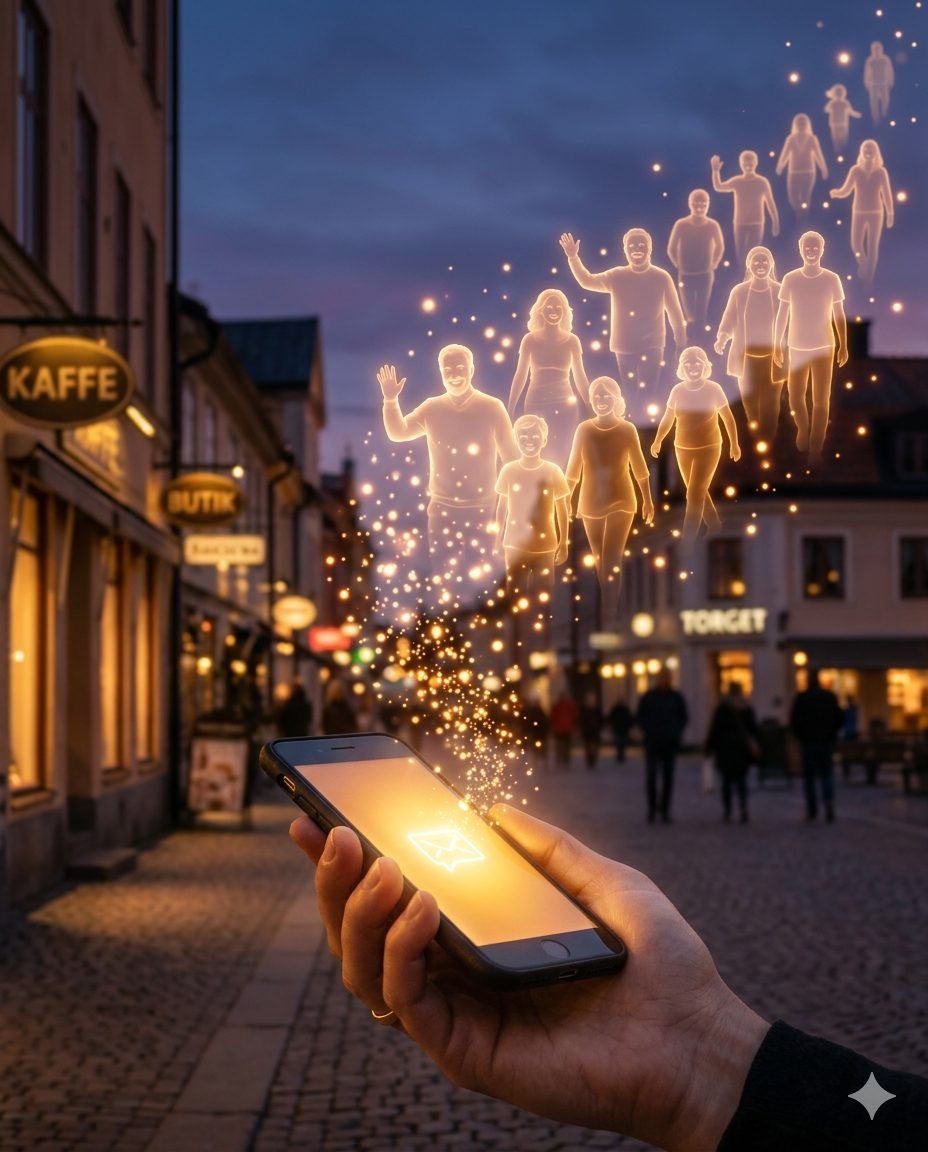
You send an email to your customers about the offer of the week. Three days later you wonder why nobody showed up.
It's not that the offer was bad. It's that the email was never read.
The average open rate for marketing emails sits at around 20 %. That means four out of five customers never even see what you wrote. And of the 20 % who open the email, only a fraction actually click and act.
SMS is a completely different story — and it's down to psychology, not technology.
We all live in a constant flow of information. Newsletters, notifications, ads, social feeds. The brain has learned to filter out most of it automatically — without us even noticing.
But SMS is different. It's a channel we associate with close relationships. Family. Friends. Work. When the phone pings with a text, our built-in reaction is to check — now, immediately.
The numbers speak for themselves:
• 98 % of all SMS are opened (vs. 20 % for email)
• 90 % are read within 3 minutes of being received
• 36 % of recipients click a link in an SMS (vs. 2 % for email)
It's no coincidence. It's how the brain prioritises information.
SMS feels more personal than an email — and that's a huge advantage.
In consumer psychology we know that personal communication drives action. A customer who feels you're talking directly to her — not to a thousand other customers — is far more likely to act. It creates a sense of being seen and appreciated.
A restaurant owner in Stockholm tells us: "We sent an SMS one rainy Sunday about an evening offer. The pizzas sold out within two hours." That doesn't happen with email.
Another big advantage of SMS is that it's real-time. You can send a lunch offer at 10:30 on a Monday — and reach customers right when they start thinking about what to eat.
That doesn't work with email. Nobody is sitting around waiting for a newsletter at lunchtime.
With the right timing, a simple SMS with an offer can create a measurable spike in foot traffic to your shop or restaurant — the same day it's sent.
One thing is important to remember: SMS is powerful, but it requires relevance. If you send too often, or with content that doesn't matter to the recipient, it feels intrusive.
The trick is to segment. Don't send the same message to everyone. A customer with seven of ten stamps needs a completely different message than one who hasn't visited in three months. The right message to the right person at the right time — that's the formula.
Email isn't bad. It's simply the wrong channel for reaching customers in real-time with relevant offers. SMS cuts through the noise, feels personal, and drives action fast. It's not a trick — it's psychology. And it's a huge opportunity for any small business owner who wants their customers to actually act on what they say.
Want to see how peers in your industry use SMS to bring customers back – without spamming?