IMPLEMENTATION
Easy for staff
The system that staff actually use always beats the ones that look the best in a demo.
There's a pattern that keeps coming back in small businesses that have tried loyalty systems that didn't work. It's nearly always the same thing.
It's the staff at the till who stopped using it after two weeks.
Why the staff is decisive
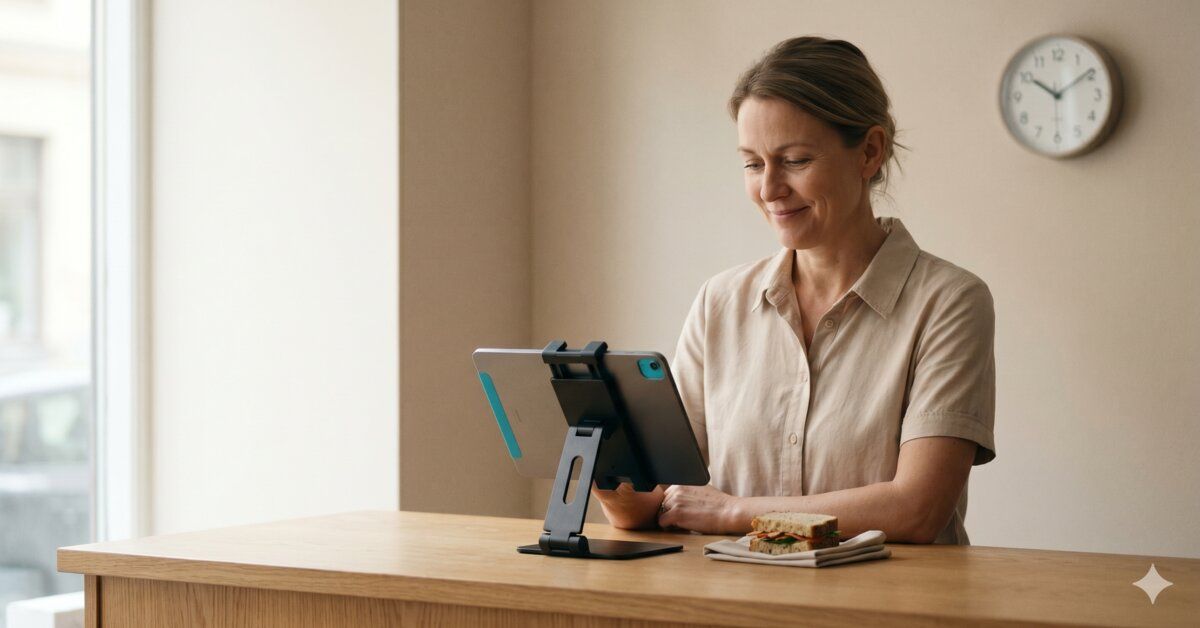
In a salon, a café, or a shop with more than one employee, it isn't the owner who does most of the stamps. It's the staff.
These are people who weren't at the sales meeting. And their priority in that checkout queue at 12.30 isn't to build loyalty — it's to handle the customer in front of them.
If the loyalty step adds more than 5 seconds per customer interaction, it will get skipped.
The three criteria
Criterion 1: Under 10 seconds per interaction. From the customer saying she wants to add a stamp to it being done, it should take less time than handing over a receipt.
Criterion 2: No learning curve. A new hire should be able to start using the system after 60 seconds of introduction.
Criterion 3: No stress if something goes wrong. If the tech crashes, it should be possible to skip it seamlessly.
Kemal at MoeJoe's confirms: "The SMS function is both effective and simple. The response rate is very high."
What doesn't work
An app that the customer has to open. Staff have to wait while the customer finds the app.
A QR code that the customer scans themselves. Sounds smooth, but requires camera, lighting, and scan space.
Points system with complicated math. Staff need to understand how points are earned.
What works is the simplest: the customer enters their mobile number the first time. Staff scans that and the number at the till. A stamp is added on press.
Summary
Loyalty programmes rarely fail because of the idea, the customers or the vendor. They fail because they're too cumbersome for staff to bother using. Choose simplicity first.
See what a simple implementation looks like. Test PayAtt's till flow →