CUSTOMER COMMUNICATION
Segment SMS without a CRM project
Four simple customer segments go further than you think. No data projects, no technical headache.
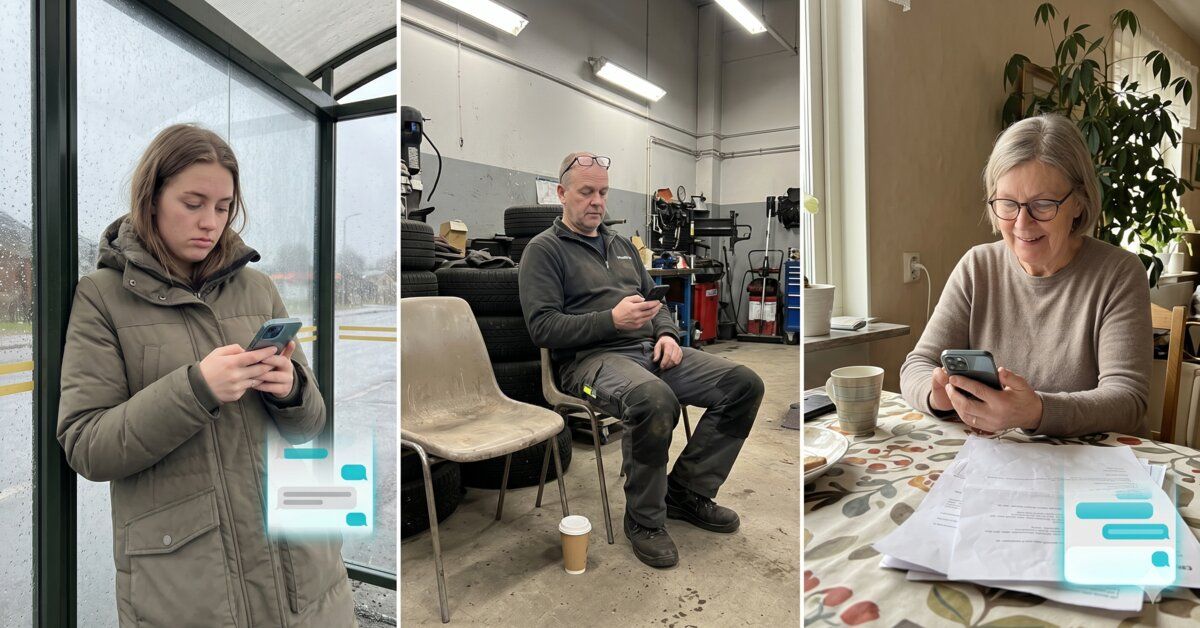
When you send the same SMS to all 400 customers, something strange happens. Half read and ignore. A quarter read and are irritated. A tenth reply or act. And the ones who were really valuable get the message diluted along with everyone else's.
The mass send is easier to send, but it is nearly always wasteful.
Segmented sends work better. Much better. And the myth that segmentation requires an expensive CRM implementation is exactly that – a myth.
The number that makes it worth the effort
Studies from HubSpot and Klaviyo consistently show the same pattern when comparing broad mass sends against segmented sends:
Click rates typically rise 3–5x. Revenue per send typically rises 2–4x. Unsubscribe rate halves.
That last one is just as important as the first two. When you segment, you don't burn out your list.
Want to see how this works at the till? Explore PayAtt's segmentation tools →
Four segments that cover 90% of the need
Segment 1: Close to reward. Customers who have 7–9 stamps out of 10. They usually convert on a small nudge. "Hi Anna, you're just one stamp away from your free coffee!"
Segment 2: Inactive. Customers who haven't been in for 30, 60 or 90 days. "Hi Khalid! We haven't seen you in a while – the coffee is on us next time."
Segment 3: New. Customers who signed up in the last 14 days. They're in the learning phase.
Segment 4: Everyone. Sometimes a broad send is actually right. But it should be the exception.
Angelina at Studio Idana describes the difference: "We can reach customers who are close to earning a reward, those who haven't been here in a while, or those who have something pending."
Why it doesn't have to be a CRM project
The classic journey is: pick a CRM, design a data flow, integrate with the till. It takes months.
Modern small-business-friendly loyalty systems have segmentation built in. Number of stamps, last visit, total visits, registration date: it's all already in the tool.
That means segmentation happens via a few simple dropdown menus. No integrations. No data flows.
What you shouldn't segment on
Demographics (age, gender, income) – you don't have this data. Skip it.
Detailed product-category preference – more complexity than value.
Psychographic profiles – sounds impressive but adds no value.
Stick to behaviour-based segments.
Summary
Mass send is what's easiest to send – and what has the lowest effect. Four behaviour-based segments are enough to multiply the effect of your SMS sends, and modern systems deliver them as a standard feature, not as an IT project.
Four segments to multiply your SMS effect. See how businesses 3–5x their SMS click rates →